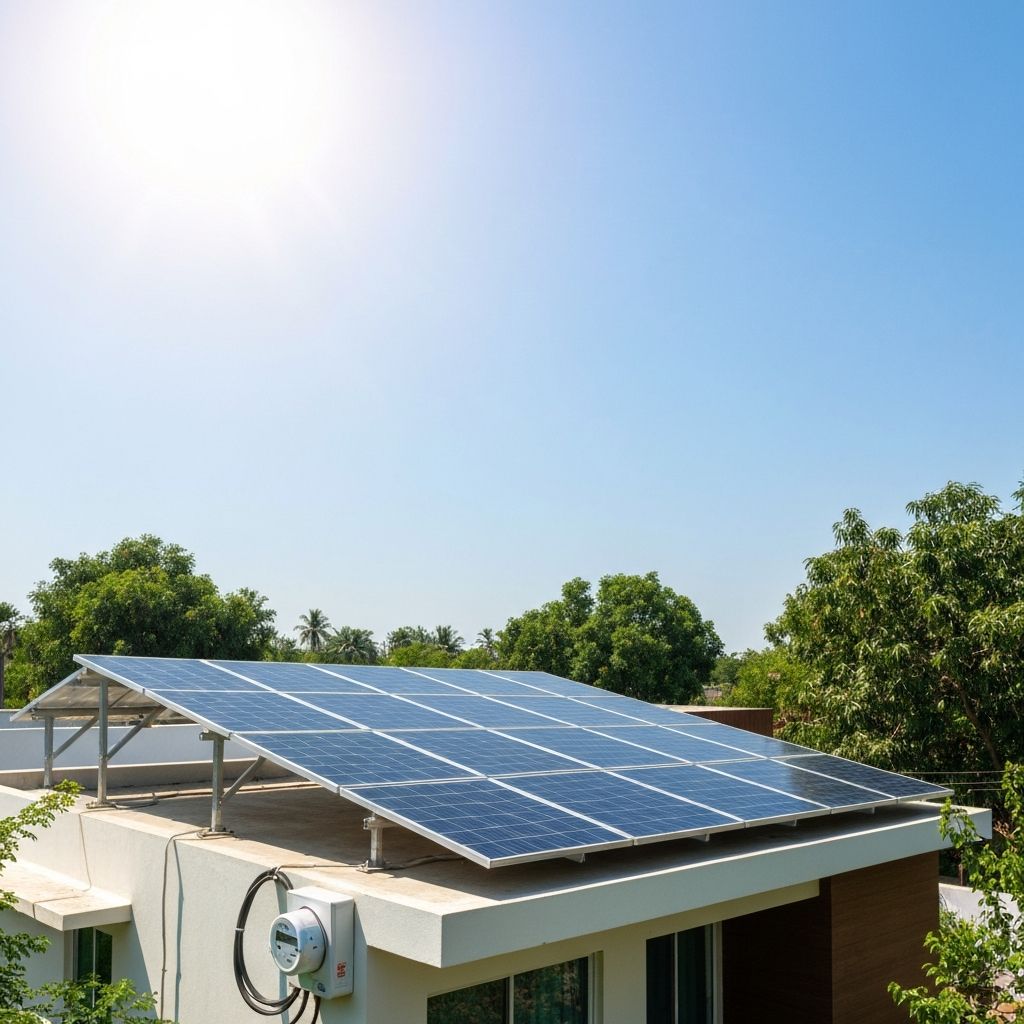
What is a On-Grid Solar System?
An On-Grid Solar System (also called a grid-tied system) is directly connected to the public electricity grid. It uses solar panels to generate electricity during daylight hours, which powers your home or business first. Any surplus electricity is fed back into the grid through a process called Net Metering, earning you credits on your electricity bill.
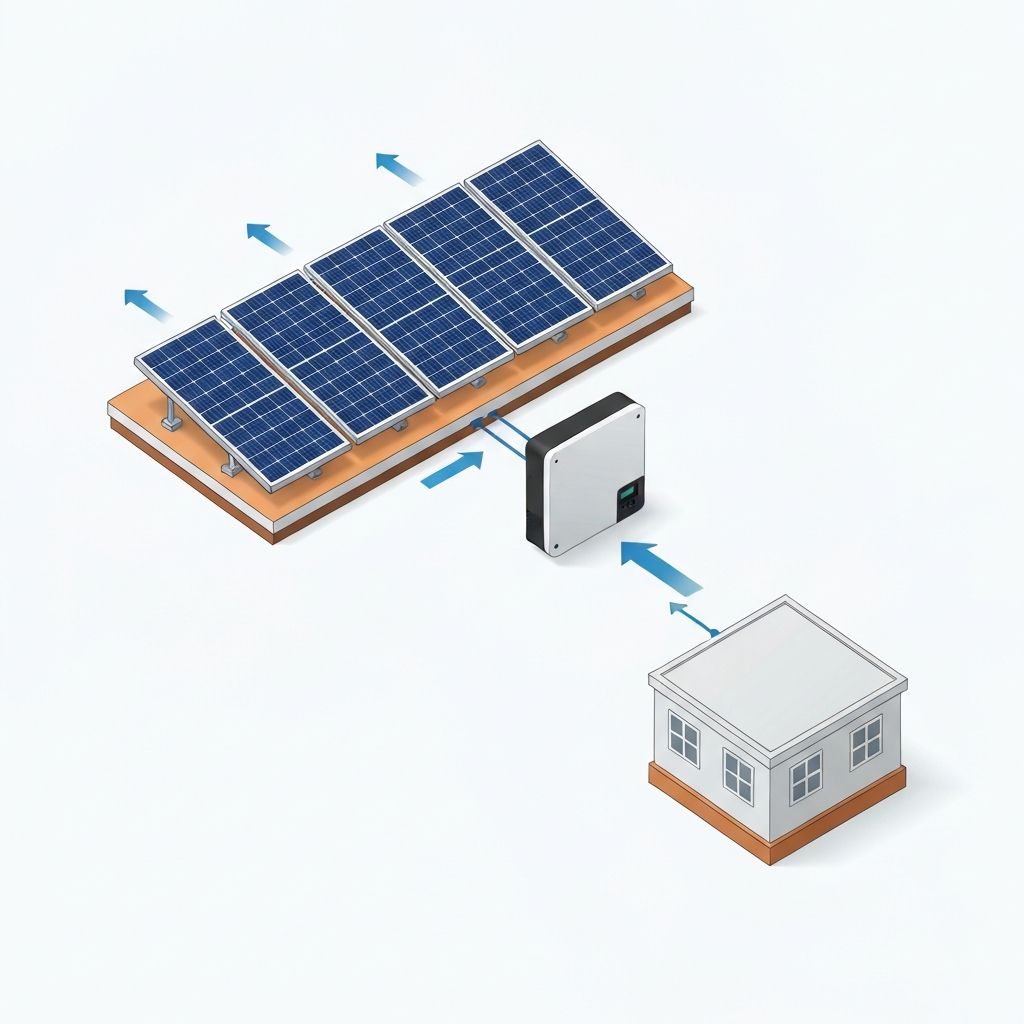
During the day, solar panels generate DC electricity which the inverter converts into AC power for your appliances. When your solar generation exceeds your consumption, the surplus is exported to the grid. At night or on cloudy days, you draw power from the grid as normal. At the end of the billing cycle, you only pay for the net units consumed — often reducing your bill to near zero or even receiving credits.
What You Get
- Directly connected to the city electricity grid
- No battery storage required — lower upfront cost
- Surplus power exported via Net Metering for bill credits
- Eligible for government subsidies (PM Surya Ghar Yojana)
- Automatic switching between solar and grid power
- 25-year panel performance warranty
- 5–10 year inverter warranty
- Complete government paperwork handled by our team
- Online monitoring system for real-time generation tracking
Why Choose This System
Lowest Installation Cost
Without batteries, an on-grid system has the lowest upfront investment of all solar types, making it the most affordable entry point to solar energy.
Zero or Minimal Electricity Bill
Net Metering allows you to offset your nighttime grid consumption with daytime solar exports, often bringing your monthly electricity bill to zero.
Government Subsidy Available
Residential on-grid systems are eligible for central government subsidies under the PM Surya Ghar Yojana scheme, reducing your installation cost significantly.
Fastest Payback Period
Thanks to bill savings and subsidies, on-grid systems typically recover their full investment in 4–6 years, then generate free electricity for the remaining 20+ years.
Who Should Choose This System?
Frequently Asked Questions
Will I still get power during a power cut with an on-grid system?
No. For safety reasons, on-grid systems shut down automatically during a power cut to protect electricity workers on the grid. If you need backup power, consider our Hybrid Solar System instead.
How does Net Metering work?
A bidirectional meter is installed at your premises. When your solar system produces more power than you use, the surplus flows to the grid and is recorded by the meter. At billing time, this exported unit count is subtracted from your consumed units — you pay only the difference.
What government subsidy am I eligible for?
Under the PM Surya Ghar Muft Bijli Yojana, residential customers can receive subsidies of up to Rs. 78,000 for systems up to 3 kW. Our team handles the full subsidy application process for you.
How many solar panels will I need?
The number of panels depends on your monthly electricity consumption and available roof area. During a free site visit, our engineers will calculate the exact system size suited to your needs.
Ready to Go Solar with Electric Solar?
Our experts will visit your site, assess your requirements, and provide a free customised quote — no obligation.